







 About us
Something curious happened when we began work on our 150th issue of Headlines. What began as a small idea ended up shedding light on the world of neuro-research in a way we couldn’t have anticipated – giving insight into the extraordinary, far-reaching and ongoing impact made by the Neurological Foundation and our supporters across decades.
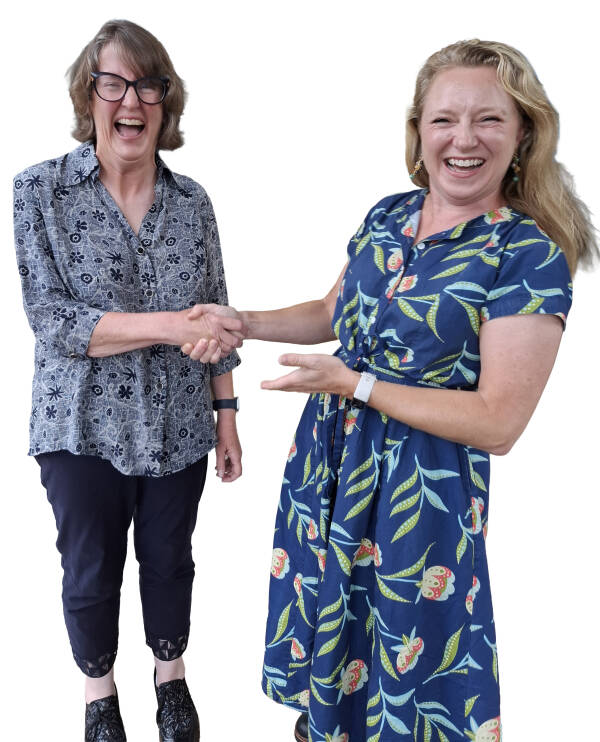
As we flicked through the first issue of Headlines from 1990, we glimpsed a small article about the Miller scholar, Kathryn Jones. Where is she now, we wondered. A quick google revealed a University of Auckland email address for Dr Kathryn Jones, so we got in touch. Her reply was unexpected.
“How fascinating! That is not me,” she wrote. “I would’ve been in Standard 4/Year 6 at that time. However, I also received a Miller Scholarship from 2008-2011 for my PhD at the University of Auckland, also working on neurodegeneration! Perhaps you should do a feature on us both – same name, decades apart.”
So where was the other Dr Kathryn Jones? An internet search drew a blank, so we reached out to a renowned memory expert, Distinguished Professor Cliff Abraham at the University of Otago. “The name is vaguely familiar,” he replied. “Maybe ask John Reynolds or Dorothy Oorschot?” Good luck finding her!”
Cliff was right. “I was Kathryn Jones’ PhD supervisor, as Cliff has indicated correctly,” wrote Dorothy. “As far as I know, Kathryn now works at New Zealand Trade and Enterprise. Here’s her LinkedIn.”
An invitation to connect on LinkedIn was accepted, and a message sent. We explained the context, and she replied: “Wow – that was a long time ago... I think I still have that copy of Headlines.”
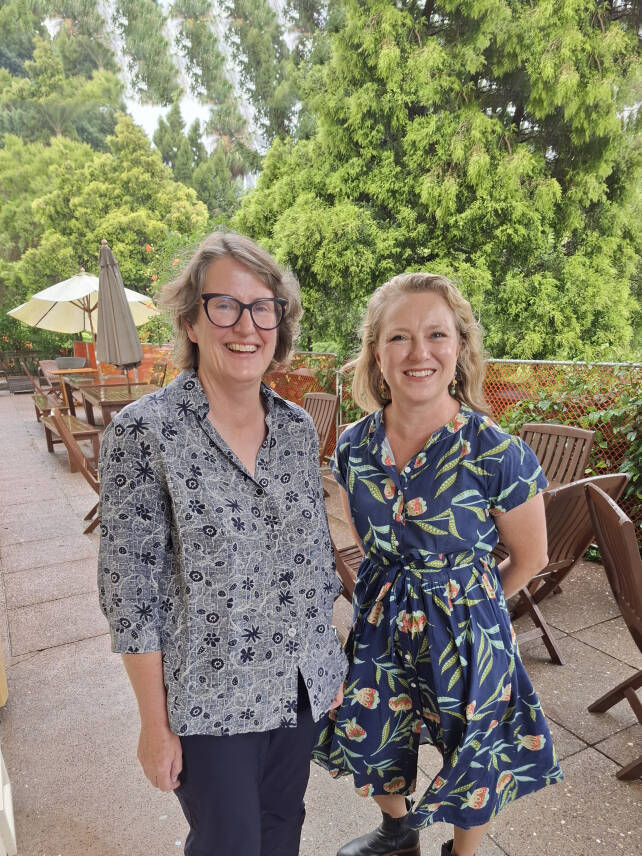
Questions were sent to both Kathryns, and their stories unfolded. It turns out that although they’ve both long-since left the lab, these brilliant women are still passionate about science, immersed in the greater good, and investing their immense skill and talent in building our country’s future.
From the ‘90s to now – celebrating exceptional impact
The ‘first’ Dr Kathryn Jones has spent her whole career trying to get science and technology treatments into the hands of people that need them.
After completing her PhD at Otago, she worked for Professor Sir Peter Gluckman, the University of Auckland’s Dean of Medicine at the time, on the commercialisation of intellectual property from his research group.
During this time, she worked for Auckland UniServices Ltd (the commercialisation arm of the University of Auckland), NeuronZ Ltd (a biotech spin-out from the University of Auckland), EndocrinZ Ltd (a biotech spin-out from the University of Auckland), and Neuren Pharmaceuticals formed from the merger of EndocrinZ and NeuronZ.
Neuren Pharmaceuticals, an ASX listed company, developed a drug with partners that’s approved for the treatment of Rett Syndrome, a rare genetic neurological and developmental disorder.
“I gained intellectual property and business development skills during this period,” says Kathryn. “I also learned that getting treatments to people who need them requires money.”
Later, Kathryn became a connector and business coach for New Zealand Trade & Enterprise (NZTE), our country’s business development agency. “This has involved working with many science and technology companies in the medical devices, life sciences and pharmaceutical industries. I’ve learned a lot about commercialising science and technology.”
Kathryn’s family and mentors supported her decision to try something different, but related, to the bench science path she started out on. "It was unconventional at the time, but it isn’t now,” she says. “So many skills have been transferable: desk research, validating information, logical thinking, writing grants, problem-solving, project design and management, presenting, and other communication skills.”
Does she remember featuring in that first Headlines magazine? “I do, wearing my stripey tee shirt. I did not know it was the first Headlines magazine!”
From lab to lectern – inspiring young minds
The ‘second’ Dr Kathryn Jones is now the Deputy Head of School – Academic, leading the Biological Science major in the University of Auckland’s School of Biological Sciences. She says the success she’s found in an education-focused academic role can be directly linked to the Miller scholarship funding.
"I use my expertise to teach neuroscience to thousands of undergraduates and inspire the next generation of scientists,” says Kathryn. “I love inspiring students’ curiosity and desire to become lifelong learners. Teaching them about our cells, and how incredible those cells are, opens an unseen molecular world to explore to benefit human health. I also love being able to lead curriculum design and teaching excellence. These students will become our skilled workforce, and science-literate members of society – essential for our country!”
Kathryn received a prestigious UoA Vice Chancellor’s early-career teaching award in 2022, which she called “an amazing recognition of my work”. All her teaching is research-led, so she is still immersed in the latest science. “The difference is, instead of making the findings myself, I share them widely with others and discuss where they can lead.”
Kathryn says her research background still informs her work now. “Being a researcher involves excellent critical analysis skills, deductive reasoning, evaluative judgement, time management, financial management and more – skills needed in a science graduate, so I teach these skills within my courses,” she says. “We run experimental labs in all our courses. Learning is neuroscience, so my previous research into neurogenesis aligns very nicely with implementing neuroscience-backed learning strategies for my students.”
What does she see when she looks at the latest crop of students? “I see a passionate group of budding scientists, some ready to jump into post-graduate learning and research, with neuroscience remaining one of the most popular pathways; others ready to move into the workforce, both excited and a little nervous about job opportunities available.”
Both Kathryns remain extremely grateful for the early support from Neurological Foundation donors. “I think it’s fabulous to feature the non-traditional journeys of scholarship recipients and see how wide the impact of the funds can be,” says Kathryn Jones, University of Auckland. “Your donations are life-changing.”
NZTE’s Kathryn Jones agrees. “Thank you for helping me achieve my PhD. What I learned has helped me reach my career goal of getting science and technology products into the hands of people that need them to improve their quality of life.”
More fun facts about the two Kathryns:
‘First’ Kathryn (NZ Trade & Enterprise):
- Early influencers: Professor D Gareth Jones, Head of the Department of Anatomy at Otago when she was doing her Honours and PhD, and Professor Dorothy Oorschot, her PhD supervisor. Her Honours degree supervisor, Dr Marilyn Duxon, was another key influence. Dr Oliver Sacks was also a mentor through his books.
- At NZTE, she has worked alongside the following types of companies: specialised manufacturing, cleantech, deep tech, health, biotech, agritech, astronautics, aircraft tracking and productivity, hygiene solutions, wireless power, tendering and procurement, and fixtures and fittings.
- She had oversight, and prior to that operations management, of a $4 million per annum grant fund at NZTE called the Australia New Zealand Biotechnology Partnership Fund.
- She’s a director of the Presbyterian Development Society, an Elder at the Community of St Luke, and Chairperson of the Global Safety and Wellbeing Committee at NZTE.
- With piano and organ players on both sides of her family, she says she was destined to be a keyboard player. She loves the piano and sings in a church choir.
- She’s done a lot of volunteer work for conservation projects - Tiritiri Matangi, Project Island Song, Pūkorokoro Miranda Trust, Pirongia Te Aroaro o Kahu Restoration Society. This has included guiding, being part of kōkako and tīeke bird monitoring teams, working bees, and giving presentations on the Tiri project to community groups.
- She gets her research ‘fix’ beyond the lab now days. She undertook legal research during an MComLaw(Hons) at the University of Auckland, has done genealogy research, and has been involved in citizen science projects through her Tiritiri Matangi Island conservation work since 2005.
‘Second’ Kathryn:
- She did undergraduate and Honours at Victoria University (BCA Economics and BSc in Biological Sciences with majors in molecular biology, genetics and biochemistry, First class Honours in cell and molecular bioscience ), PhD in Pharmacology from University of Auckland, in the Centre for Brain Research, and PGDip in Higher Education.
- She developed a love of neuroscience in her Honours year, which took her to London where she worked as a research assistant at Kings College in the Institute of Psychiatry. The Miller scholarship brought her home to Auckland for her PhD.
- Her number-one mentor was Professor Bronwen Connor. Bronwen provided not only academic guidance (and consumable funds to complete the work) but also opportunities to build her academic career via grants, publications, teaching, and sitting on committees. “She lifted me up and allowed me to succeed,” Kathryn says.
- A major influence on her work was Professor Magdelana Goetz – a developmental biologist from Germany who she collaborated with when working in London, and who also provided plasmids used to make viral vectors for her PhD. Kathryn describes her as an inspirational woman with a love of neurogenesis.
- The human genome project was completed when Kathryn was an undergraduate, and she found the idea of manipulating genes, and cloning, very exciting. Around this time her grandfather developed dementia. Watching him slip away made her consider how she could use molecular techniques to improve outcomes for those with neurodegenerative diseases. In 2026, her grandmother (his wife), is now aged 101. Kathryn says this makes the contrast between what happens in the cells in people’s brains even more interesting.
- Kathryn’s move into an education role came near the end of a grant covering her salary, and she was considering her options. She realised she loved contact with students and watching their growth. A professional teaching fellow role in the School of Biological Sciences was advertised, and she felt it was the right time for a move. “With many teachers in the family line, they were excited that I could continue to have ongoing impact in the neuroscience world through teaching,” she says.


 Donate