







 About us
Around 1100-1200 Kiwis are diagnosed with primary brain tumours each year, and finding effective treatments is a huge challenge. To mark Brain Cancer Awareness Month this May, we chatted with two early-career researchers at the University of Auckland’s Centre for Brain Research, funded by the Neurological Foundation, who are determined to offer hope to people with brain cancer.
“If there's one thing I've learnt about science, it is to always expect the unexpected,” says Dr Susan Li, a Neurological Foundation First Fellow. PhD researcher Ben Watkin agrees. “Research rarely follows a straight line, and looking closely at real patient tissue has already offered some fascinating new directions,” he says.
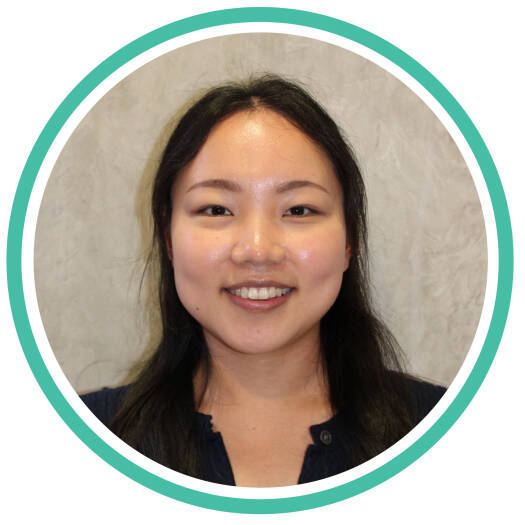
Susan studies how radiation therapy affects brain tumours and the normal brain surrounding it, with the hope of alleviating the bad side effects caused by it while preserving the therapeutic effects.
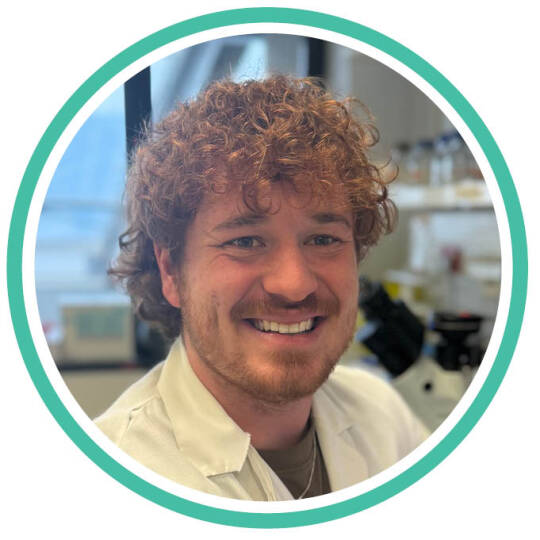
Ben investigates how a brain tumour ‘changes its neighbourhood’ through building ‘highways’ that promote its own growth and spread. By understanding this, he says, we stand to significantly reduce brain cancer mortality.
Both researchers are passionate and committed to making a genuine difference. So far, their work is showing promising results.
Susan wanted to combine her two passions - neuroscience and cancer biology - so chose the field that studies exactly that: tumours in the brain.
Ben is driven by both personal experience and academic discovery. “In 2019, caring for a patient with dementia gave me a firsthand look at how neurological conditions impact daily life, which sparked a deep drive to find solutions for those facing these challenges,” he says.
Later, while working at the Hugh Green Biobank following his Master’s degree, Ben’s work on a glioblastoma project involved receiving and processing tumour tissue arriving directly from the hospital.
“Handling samples that had been part of a patient’s body less than an hour earlier made the research feel especially immediate and meaningful,” he says. “Seeing the frequency of these cases and the diverse range of people affected made it clear that this is a dire and urgent problem. It has left me both emotionally and intellectually invested in doing my part to find a solution.”
Ben has begun work with glioblastoma 'stem cells', derived directly from patient tumours. “These cells are essentially the 'architects' of the cancer and having them 'up and running' in the lab is a vital milestone,” he says. “I am now using these cells to create a more realistic model of the 'changing neighbourhood' concept. By growing the tumour cells alongside the brain’s natural scaffolding, we can observe their interplay in a way that simply isn’t possible when looking at cells in isolation. This allows us to see exactly how the cancer hijacks its environment to promote its own survival, bringing us a step closer to understanding how the disease behaves within a patient.”
Ben is currently trialling methods to 'turn off' or dial down specific proteins in lab cultures. "This allows us to see exactly how much they influence the cancer’s ability to migrate. It is an exciting phase of the project where we move from observing the problem to actively testing how to disrupt it.”
Meanwhile, Susan says findings from her experiments have been somewhat unexpected. She can’t go into too much detail at this stage, but says it’s to do with the activation of a pathway that’s known to cause inflammation. She is currently working on expanding those results and figuring out the mechanism behind them.
She says that learning about the way radiation affects the different types of cells in our brain is the single most fascinating thing about her research to date. “Previously, we always thought about radiation and its effects holistically. But to actually break down its mechanisms in different cell types and to see how it affects them individually is quite exciting.”
Asked what she loves most about her job, Susan replies: “I think it's the freedom to study what interests me. There is an overarching direction or objective I'm trying to achieve, but the means of getting there is entirely up to me and I love that.”
Ben says he feels a sense of awe that never really goes away. “Every now and then, I’ll be halfway through an experiment, and it will suddenly hit me: 'I am working with a human brain right now.' It is that mix of pure scientific wonder and the knowledge that these microscopic details represent a real person’s journey that give me those moments,” he says. “To me, this highlights the unique chance I have to better understand this devastating disease, to work towards better treatment, and to give back to our community through research. That’s what makes the work so rewarding.”
Both researchers make bold predictions for the future. Susan says: “I think in 10-20 years' time, brain cancer treatment, and most other diseases, actually, will move beyond a one-size-fits-all scheme to a highly personalised strategy that's tailored to each patient. A patient with brain cancer will receive comprehensive profiling of their tumour, including genetic, molecular, and even spatial information. This will be used to guide their treatment plan, and the patient will be monitored in real time with advanced biomarker tracking or imaging techniques so that any changes are instantly detected and the treatment plan altered.”
Ben sees big changes ahead, too. “In the next 20 years, I believe brain cancer treatment will move beyond just attacking the tumour cells directly. My prediction is that we will see 'environment-targeted' therapies; instead of only trying to kill the cancer, we will learn how to block the 'highways' it builds and restore the health of the surrounding brain 'neighbourhood'. By stripping the cancer of its ability to invade and hide, we can make existing treatments far more effective and significantly improve survival rates.”
Neurological Foundation supporters will watch with interest as these two brilliant young scientists work towards giving hope to patients with brain cancer.


 Donate