







 About us
2025 Round B Grant Recipients

University of Otago Wellington
$299,906
Migraine disease: Who is missing out on diagnosis and best-practice healthcare in Aotearoa New Zealand
Migraine is a common neurological condition that affects around 753,000 people in New Zealand. It causes significant pain and disability, impacting people’s ability to participate in work, family and social life. Effective treatments are available, but international research shows that migraine is often misdiagnosed and mistreated, especially among minority groups. This study will use national health data to understand who is missing out on appropriate migraine diagnosis and treatment in New Zealand. This information can then be used to improve migraine management, reduce hospital admissions and enable further research.

Starship Children's Health, Health NZ Te Toka Tumai
$290,543
NEOLEV3 in Aotearoa New Zealand
Seizures affect 1 in 300 babies in New Zealand and can be associated with lifelong developmental disabilities and epilepsy. The only approved treatment, Phenobarbital, has significant side effects and better treatments are urgently needed. This study will support New Zealand’s participation in an international trial of a potentially safer medication, Levetiracetam. It could lead to changes in neonatal seizure treatment in New Zealand, allowing babies with mild-to-moderate seizures to be spared the side effects associated with Phenobarbital treatment.

University of Otago Christchurch
$289,373
Acoustic biomarkers of cough dysfunction: Validating a smartphone-based AI approach for assessing airway protection in Parkinson’s disease
People with Parkinson’s disease often experience problems with swallowing and coughing, which can lead to pneumonia – a common cause of death. Treatments usually focus only on swallowing, even though cough strength can be used to predict swallowing dysfunction. This study will test a new smartphone-based method of assessing cough function in people with Parkinson’s and compare it against traditional cough measurement techniques. If patients are able to record their cough at home using a smartphone, this could enable more effective cough screening for people with Parkinson’s and other neurological conditions, leading to earlier diagnosis and treatment of swallowing disorders.

University of Auckland
$283,185
Defining the limits: A normative model of brain strain response to guide objective head impact assessment
To be able to assess brain injury risk in young people who play contact sports, it is important to know what is normal, if there is a cumulative effect of multiple head impacts, and how this risk changes for different people. This project will use MRI brain scans from healthy young people who do not play contact sports, to create a “normal” digital model. The model will learn from information gathered through instrumented mouthguards in youth rugby, converting the recorded signals into brain impact measures and forecasting the likelihood of injury from both isolated and cumulative head impacts. It will complement current sports concussion management, supporting decisions on monitoring, training and rest periods.

Victoria University of Wellington
$273,348
ACTION-mTBI: Acceptance and Commitment Therapy to improve recovery after Mild Traumatic Brain Injury
Around 35,000 New Zealanders experience a mild traumatic brain injury (mTBI) each year, and current treatments are not always effective. This project will test a new therapy called ACTion mTBI, which has been shown to reduce disability and improve recovery for those with ongoing symptoms. Developed in partnership with clinicians, researchers, and Māori advisors, it has been designed specifically for New Zealand. If it is proven to be more effective than current concussion services, a national implementation plan will be developed to integrate ACTion mTBI into New Zealand’s healthcare system.

University of Otago
$272,851
The menopausal mind: Estrogen’s role in rewiring reward circuits
The transition to menopause, known as perimenopause, can bring a wide range of debilitating neurological symptoms in up to three-quarters of women. Among the most significant are depression and anxiety, yet how this happens remains poorly understood. The team have identified a key hormone, called estradiol, that declines during perimenopause. When estradiol levels drop, the brain may rewire, leading to mood disorders. Using a mouse model, this study will explore how and where estradiol acts in the brain and whether replacing it during perimenopause can restore normal brain function.

University of Waikato
$20,000
Improving Parkinson’s therapy: A novel extended-release system for Levodopa
Levodopa, also called L-Dopa, is the standard treatment for Parkinson’s disease, but it requires multiple doses which can be inconvenient for patients. The effects of the treatment can wear off over time and cause complications such as involuntary, uncontrolled movements. This small project aims to develop a new type of tablet that will stay in the digestive system for longer and slowly release L-Dopa, maintaining more stable levels in the body and reducing fluctuations in movement control.

University of Auckland
$20,000
Identifying the molecular signature of glioblastoma that allows it to hide and evade detection from immune cells
Glioblastoma is the most aggressive form of brain cancer. It can affect people at any age and has one of the worst survival rates of all cancers. This small project aims to understand how glioblastoma avoids detection by the immune system. The team will identify proteins on the surface of glioblastoma cells that could be targeted with immunotherapies, which are treatments designed to help the immune system detect and destroy abnormal cells.

University of Otago
$254,921
Functional characterisation of spliceosomal gene variants in brain disorders
Diagnosing rare genetic disorders is difficult when there is not enough evidence to confirm the link between a gene change and a disorder. Delays in diagnosis can result in delays in support and treatment. This fellowship is investigating the cause of neurodevelopmental disorders in families where mutations have been found in the spliceosome, which is part of our cells essential for producing proteins. If this project can show that mutations in the spliceosome are responsible for the disorders, it will not only provide families with a diagnosis, but also establish a platform for genetic screening in patients affected by these rare conditions.

University of Auckland
$241,312
Magnetic Resonance Imaging signatures of Chronic Traumatic Encephalopathy: An ex-vivo histological validation
Repeated head knocks, even without symptoms of brain injury, are the main risk factor for the degenerative disease chronic traumatic encephalopathy (CTE). Currently, it can only be confirmed after death, by examining brain tissue under a microscope. This fellowship will use recent advances in MRI technology to look for distinctive biomarkers of CTE in confirmed cases at the Neurological Foundation Human Brain Bank, and compare these scans with microscope images of the same tissue. If CTE can be detected by MRI, it may allow diagnosis during life and open possibilities for management and treatment.

University of Toronto
$199,630
Migraine: WAVE Workplace Awareness through Virtual Education
Migraine is a leading cause of disability for people under 50, with significant personal and financial impact. Dr Meredith will travel to Canada to develop and test an online education programme designed to help workplaces support employees with migraine. The programme will explain that migraine is a neurological condition, describe its impact, and suggest ways to create migraine-friendly environments. The results from this fellowship could guide similar initiatives in New Zealand to reduce stigma and improve support for people with migraine through workplace education.

University of Auckland
$180,368
Determining the role of Bach2 in modulating glial cells as a treatment for spinal cord injury
After a spinal cord injury, the support cells which normally help to maintain healthy nerve cells, can actually cause the injury to become worse. This research focuses on a protein called Bach2, which has been found to increase after injury and might affect both inflammation and the growth of cells that help repair nerve fibres. Studying Bach2’s role in these processes will discover whether adjusting its activity could protect cells and promote healing. If successful, this research could identify a new treatment target to improve recovery and quality of life for people with spinal cord injuries.
Supervised by Dr Simon O’Carroll, Associate Professor Justin Dean, Associate Professor Deborah Young

University of Otago
$179,000
Exploring the role of chromatin remodelling genes in neurodevelopmental disorders
This project is investigating a gene associated with a neurodevelopmental disorder called Coffin-Siris syndrome (CSS), where patients have abnormal facial features and a small head size (microcephaly). One gene that is strongly associated with CSS is called ACTL6A, but it can have different genetic variations that are poorly understood, leaving families without clear answers. This research will uncover more about the ACTL6A gene, how different variants alter its function, and identify other similar genes involved in neurodevelopmental disorders, providing much needed answers to affected families.
Supervised by Associate Professor Louise Bicknell

University of Auckland
$176,234
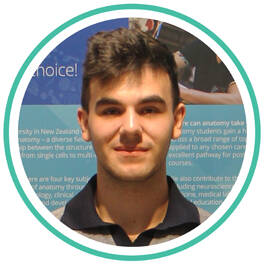
Mysterious neurodegeneration unmasked: rare and novel GGC repeat expansion diseases in Aotearoa New Zealand
A rare neurodegenerative condition called neuronal intranuclear inclusion disease (NIID), mostly found in Asia, has recently been diagnosed in Māori whānau in Aotearoa. It is caused by a mutation in a gene called NOTCH2NLC and leads to symptoms such as muscle weakness and dementia. This project aims to establish a research platform for NOTCH2NLC testing in New Zealand to improve diagnosis and understanding of NIID in New Zealand, and to lay the groundwork for future development of treatments.
Supervised by Associate Professor Emma Scotter, Dr Jessie Jacobsen, Dr Nicole Edwards, Dr Miran Mrkela
University of Otago
$124,200
Neurophysiological signatures and neurofeedback-based modulation of neuropathic pain in chronic musculoskeletal conditions
Neuropathic pain is a type of chronic pain caused by damage or dysfunction in the nervous system. It occurs when damaged nerve fibres send incorrect signals to the brain, leading to sensations such as burning, stabbing, electric shocks, tingling, or numbness. This research explores how the brain has become altered in people with neuropathic pain and tests a promising, non-invasive therapy: EEG neurofeedback. The goal is to develop a brain training programme for those with chronic pain to improve symptoms and potentially create long-term pain relief.
Supervised by Dr Jerin Mathew, Dr Divya Adhia, Professor Dirk De Ridder, Dr Ramakrishnan Mani

University of Otago, Christchurch
$9,000
Is Mild Behavioural Impairment associated with blood-derived markers of neuropathology in Parkinson's disease?
Lack of motivation and interest is commonly experienced by patients with Parkinson's disease (PD). This project explores whether these early behavioural changes can signal future dementia. It will examine blood samples from 200 PD patients to see if apathy is linked to known biomarkers. If these markers, combined with apathy, predict faster cognitive decline, this research could help doctors identify people at higher risk of dementia earlier, leading to better monitoring and potential treatments to improve quality of life for those living with PD.
Supervised by Dr Campbell Le Heron

University of Auckland
$9,000
Can Etanercept Prevent Cortical Brain injury in Preterm Fetal Sheep?
Low oxygen can cause brain injury in premature babies and lead to lifelong disabilities. This research aims to find out how a drug called Etanercept can protect the brain. The team have already seen promising results in protecting the brain's 'wiring' in animal models. This project will confirm whether Etanercept also protects brain cells, and how it affects inflammation and growth. If Etanercept is shown to reduce damage and improve brain development, this could lead to new treatments that help prevent long-term problems like cerebral palsy and learning difficulties in babies born too early.
Supervised by Dr Ben Lear and Dr Victoria King

University of Otago, Wellington
$9,000
The Impact of CTP and Telestroke Workflow Changes
Strokes require rapid specialist guided treatment. For patients in non-urban areas, specialists can remotely guide treatments via ‘telestroke’, which can involve phone calls between doctors, or a full patient video assessment. This research aims to find the best way to deliver urgent stroke care in New Zealand, comparing telestroke and standard care, to see which leads to faster treatment and better patient outcomes. By analysing national stroke data, the goal is to identify the most efficient and cost-effective model of care to guide New Zealand stroke services.
Supervised by Professor Anna Ranta
University of Auckland
$3,747
Centre for Brain Research early-mid career researchers retreat
This two-day retreat was held in November 2025 to provide networking and professional development for early career neuroscience researchers, supporting them to make an impact on the future of brain health research in New Zealand.
University of New South Wales Sydney
$20,000
Australasian Course in Advanced Neuroscience (ACAN)
This intensive three-week course will be held in May 2026 at the University of New South Wales Sydney. It will bring together leading scientists and students from New Zealand and Australia to explore how the brain works, using the latest neuroscience technology. This grant supports New Zealand early-career researchers to gain world-class skills and build international networks, accelerating discoveries that improve our understanding and treatment of neurological conditions.

University of Otago
$4,500
Alzheimer's Association International Conference (AAIC) 2026

Auckland University of Technology
$4,500
World Stroke Congress, 2025
University of Auckland
$4,500
Seoul National University Bundang Hospital Neuro-Oncology Laboratory

University of Otago
$4,208
Lab visit to Hudson Institute of Medical Research AND conference travel to the Fetal and Neonatal Physiological Society 2025 conference

University of Auckland
$3,715
Australasian Neuroscience Society Conference and Cellular and Molecular Advances in Neurodegeneration satellite meeting

University of Otago
$3,460
20th International Xenopus Conference (IXC25)

Health NZ Te Toka Tumai Auckland
$2,013
GP2 meeting and MDS Conference in Honolulu, Hawaii. Followed by visit to Samoa to work with people in the community
 Donate